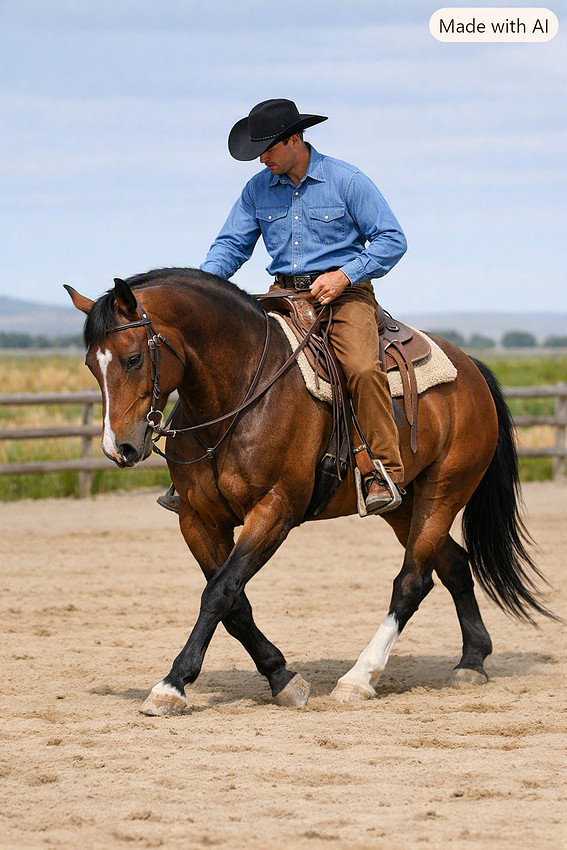
Horse Maneuver Guide
Body Shaping with Cues
Maneuver 1: Tight Circle — Body Shaping With Cues
Goal: Shape the horse so the shoulders stay free, the hip stays out, and the circle stays tight.
How to Shape the Horse:
- Shape the nose slightly inward Use the inside rein softly to tip the nose without pulling.
- Shape the shoulders to stay loose and free Lay the outside rein snug against the neck to guide the shoulders around the circle.
- Shape the hip outward Press with your inside leg to push the hindquarters out and prevent the horse from falling inward.
- Shape your own body to match the circle Turn your eyes, torso, and seat in the direction of travel so the horse follows your alignment.
Result: The horse flows around the circle with balance, free shoulders, and correct alignment.
Maneuver 2: Two‑Track — Body Shaping With Cues
Goal: Shape the horse so the nose looks one way while the body travels another, creating two distinct tracks.
How to Shape the Horse:
- Shape the nose to the right Use the right rein softly to ease the nose to the right without bending the whole body.
- Shape the shoulders to stay straight Use the left rein to guide the shoulders and prevent them from drifting or over‑bending.
- Shape the hindquarters to stay under the horse Keep your left leg on to block the hips from swinging left.
- Shape your line of travel to the left Aim your seat and torso left so the horse follows the only open path.
Result: The horse moves left in a straight, controlled line while the nose stays tipped right, producing a clean two‑track.
Maneuver 3: Point‑and‑Shoot — Body Shaping With Cues
Goal: Shape the horse to commit instantly and confidently to a clear line of travel.
How to Shape the Horse:
- Shape your focus toward the target line Lock your eyes on the exact point you want to travel toward.
- Shape your torso and seat to align with the line of travel Turn your body so your hips and shoulders match the direction you intend to go.
- Shape the forward energy of the horse Press with your inside leg to create the power for the gait you want.
- Shape the straightness of the movement Point both hands forward together, keeping the reins even to guide the horse straight without pulling.
Result: The horse commits to the line, moves straight and without wobble, and responds to your intention rather than mechanical cues.
Maneuver 4: Spin — Body Shaping With Cues
Goal: Shape the horse so the shoulders turn crisply around a planted inside hind leg while the body stays straight and elevated.
How to Shape the Horse: • Shape the nose slightly to the inside Use the inside rein softly to tip the nose just an inch inward without bending the whole neck.
• Shape the shoulders to lift and move around Use the outside rein to guide and support the shoulders, keeping them elevated and preventing forward drift.
• Shape the hindquarters to stay anchored Keep your inside leg at the cinch to hold the pivot leg in place and stop the hips from stepping out.
• Shape your line of motion around the pivot Aim your seat and torso straight and centered so the horse follows the only open path: around, not forward.
Result: The horse stays straight through the body, plants the inside hind, and turns the shoulders around in a clean, cadenced spin.
Maneuver 5: Standstill‑to‑Lope — Body Shaping With Cues
Goal: Shape the horse so he lifts, steps cleanly into the correct lead, and moves forward in one smooth stride from a standstill.
How to Shape the Horse (Right Lead):
• Shape the nose slightly right Use the right rein softly to tip the nose just enough to indicate the lead without bending the whole neck.
• Shape the shoulders to stay elevated and free Use the left rein to support the shoulders so they don’t fall inward or drift before the lope step.
• Shape the hindquarters to step under on the outside leg Keep your right leg at the cinch to stabilize the ribcage and prevent the hips from swinging out. Move your left leg slightly behind the cinch to ask the outside hind to step under and initiate the right lead.
• Shape your line of motion forward and up Aim your seat forward, not upward or backward. Open your hips so the horse sees the only available path: forward into the lope.
Result: The horse lifts, steps under with the left hind, and rolls cleanly into a right‑lead lope in one stride.
Maneuver 6: Rollback — Body Shaping With Cues
Goal: Shape the horse so he stops, pivots over the hocks, and leaves in the opposite direction in one fluid motion.
How to Shape the Horse:
• Shape the nose slightly into the stop Use both reins evenly to bring the nose straight and prepare the shoulders for the rollback.
• Shape the shoulders to lift and pivot Use the outside rein to support the shoulders so they stay elevated and ready to roll over the hocks.
• Shape the hindquarters to sit and coil Keep both legs close to hold the ribcage centered, allowing the hindquarters to drop and load for the pivot.
• Shape your line of motion backward then out Aim your seat deep for the stop, then shift your torso toward the new direction to open the path for the departure.
Result: The horse stops, pivots over the hocks, and leaves in the opposite direction with a clean, powerful rollback.
Maneuver 7: Lead Change — Body Shaping With Cues
Goal: Shape the horse so he switches leads in one stride while staying straight, balanced, and elevated.
How to Shape the Horse:
• Shape the nose slightly toward the new lead Use the new inside rein softly to tip the nose without bending the whole neck.
• Shape the shoulders to stay straight and lifted Use the new outside rein to support the shoulders and prevent diving or drifting during the change.
• Shape the hindquarters to step under on the new outside leg Move your new outside leg slightly behind the cinch to ask the outside hind to step under and initiate the new lead.
• Shape your line of motion forward and level Keep your seat centered and forward so the horse sees the only open path: a smooth, forward lead change.
Result: The horse switches leads in one stride, staying straight, balanced, and ready for the next maneuver.
Maneuver 8: Stop and Back — Body Shaping With Cues
Goal: Shape the horse so he stops square, softens, and backs straight with light, rhythmic steps.
How to Shape the Horse:
• Shape the nose straight and soft Use both reins evenly to keep the nose centered and relaxed for the stop and back.
• Shape the shoulders to stay lifted and straight Use light rein support to prevent the shoulders from drifting or dropping during the back‑up.
• Shape the hindquarters to step evenly backward Keep both legs close to maintain straightness and encourage the hind legs to step back in rhythm.
• Shape your line of motion backward with your seat Shift your seat slightly back and breathe out to open the backward path and invite the horse to follow.
Result: The horse stops square, softens, and backs straight with light, even steps.
Maneuver 9: Cow‑Tracking Position — Body Shaping With Cues
Goal: Shape the horse so he stays in the correct position on a cow: balanced, responsive, and ready to mirror the cow’s movement.
How to Shape the Horse:
• Shape the nose toward the cow Use the inside rein softly to keep the nose pointed at the cow without over‑bending.
• Shape the shoulders to stay elevated and ready Use the outside rein to support the shoulders so they can lift, turn, or stop instantly.
• Shape the hindquarters to stay under and coiled Keep both legs close to maintain readiness for quick stops, turns, or rollbacks.
• Shape your line of motion to match the cow Aim your seat and torso directly at the cow so the horse follows the only open path: the cow’s movement.
Result: The horse stays balanced, elevated, and ready to track, stop, turn, or roll back in perfect cow‑working position.
Maneuver 10: Cow‑Chase Position — Body Shaping With Cues
Goal: Shape the horse so he locks onto the cow, stays balanced and elevated, and moves with the cow’s line of travel at speed.
How to Shape the Horse:
• Shape the nose toward the cow Use the inside rein softly to keep the nose pointed at the cow without bending the whole neck. This keeps the horse’s attention fixed on the cow’s shoulder.
• Shape the shoulders to stay lifted and ready to turn Use the outside rein to support the shoulders so they stay elevated and prepared for instant direction changes. This prevents diving or dropping when the cow moves.
• Shape the hindquarters to stay under and coiled Keep both legs close to maintain readiness for quick stops, rollbacks, or bursts of speed. This keeps the hind end loaded and ready to push.
• Shape your line of motion to match the cow Aim your seat and torso directly at the cow’s shoulder. The horse will follow the only open path: the cow’s movement, whether forward, sideways, or stopping.
Result: The horse locks onto the cow, stays balanced and elevated, and mirrors the cow’s movement with clean, responsive tracking.
The Emergency Stop
Maneuver 11: Tight Circle — Emergency Stop Goal: Shape the horse so he cannot run forward, causing him to slow, rebalance, and stop safely.
How to Shape the Horse:
• Shape the nose sharply inward Use the inside rein to bring the nose into the circle, removing the horse’s ability to travel straight.
• Shape the shoulders to fall into the circle Use the outside rein to prevent the shoulders from escaping outward, forcing the horse to follow the arc.
• Shape the hindquarters to disengage Use your inside leg to block the ribcage and your outside leg to push the hips slightly out, removing forward drive.
• Shape your line of motion into the circle Aim your seat and torso into the circle so the horse sees the only open path: a tight, slowing turn.
Result: The horse loses forward momentum, disengages the hindquarters, and stops safely without force or panic.
Maneuver 12: Cutting Horse Safety — Body Shaping With Cues
Goal: Shape yourself and the horse so he tracks the cow safely without dropping, diving, or exploding out from under you.
How to Shape the Horse:
• Shape the nose toward the cow without over‑bending Use the inside rein softly to keep the nose pointed at the cow’s shoulder. This keeps attention forward without triggering a full cutting drop.
• Shape the shoulders to stay elevated and controlled Use the outside rein to support the shoulders so they stay lifted and ready, but not released enough to initiate a cutting maneuver.
• Shape the hindquarters to stay under and balanced Keep both legs close to maintain readiness, but do not drive the hindquarters aggressively. This prevents the horse from coiling for a full cutting burst.
• Shape your line of motion forward and centered Aim your seat straight and neutral. Do not lean forward (which cues a drop) and do not lean back (which destabilizes you). Neutral seat = safe tracking.
Result: The horse tracks the cow smoothly and safely, staying balanced and responsive without performing a full cutting maneuver.
]]>
At times, the words echoed off the walls; other times they were spoken as a harsh demand, a rule I was expected to follow. I rolled the words in my mind. My comprehension of words and concepts exceeded my ability to distinguish truth from cruel manipulation disguised as correction. I must hide, or no one will like me.
Another phrase that remained with me was a lie. I conditioned myself never to speak those words. A spoken word defines a reality that defies reason and seeks confirmation. To speak those words aloud, or even to put them in text, might validate them; I will not take that risk. My refusal to acknowledge the lie was either profound wisdom or the grace of God—or perhaps both.
A wise man wrote these words hundreds of years ago: “By words we may inflict injury… especially by bringing sorrow to the heart.”
He explained that words are acts, not mere sounds, and thus can cause spiritual and emotional harm that is real and serious. Sorrow of the heart shows itself as discouragement, fear, and a dismantled confidence. He described the life I lived.
The phone rang. I was on the floor in the living room. My mom asked if I wanted to go to the house of a boy from my class and play. Fear enveloped me. I folded my legs into my chest and held tight.
“No.”
I had been taught that being known was dangerous.
For many years I constrained my actions and guarded every response. I now understand the damage that had been done to my soul, and I am unfolding—allowing myself to be known.
Sustained harsh words crush the personality and damage the soul. I once asked a man who trains bulls for professional rodeos whether the bulls were dangerous in the pasture. He pointed to a huge beast with a countenance that unsettled me.
“You could walk to him and scratch his head, and he will snuggle next to you.”
He pointed to another one.
“That one will kill you.”
“What makes the difference?” I asked.
“The way he was raised.”
A soul loved early and often responds with love; a soul shaped by fear and severity does not know how to love.
The environment of my early life required vigilance and endurance. The methods used to enforce compliance were severe enough to teach me to live with a guarded posture.
I am grateful that I remember the trauma of my youth. Better to know the source than to wonder about the reason.
In college I lived in close quarters with many other young men. The color of the leaves dictated the proper sport. The gold leaves on the branches and brown leaves on the ground demanded a football game. I decided to participate. Football seemed like a good way to be known; my innate wisdom enabled me to take the risk. The other players were unaware of the apprehension I had to overcome to join them.
The light rain did not deter the game. A football game on grass soon became a football game on wet dirt. As the autumn sun positioned itself on the hills, the air cooled. The designated quarterback tossed the football to his teammate, who caught it with a smile. We knew the game was over. I was as mud‑covered as any of them. As we walked back to the dorm we tossed the football to each other.
I looked to my right to see who quickened his pace to walk with me. He kept his face forward, with a quick glance at me. He rammed his shoulder into mine; an impish grin cracked the dried mud on his face. I had never felt as accepted as I did at that moment. My soul was a bit brighter. My breath was less constrained. Back to our physics books and calculus homework.
Recovery begins when truth becomes more important than the damage. Truth cauterizes the wound, so the damage no longer controls the response. Old wounds become scars—proof that truth prevailed. The soul that God intended rises with a hug of gratitude.
Reflection
Participation was the catalyst that showed me my healing had been accomplished. My new friend, the kid who rammed his shoulder into mine, not only saw me, he acknowledged me. The shoulder ram was the first of many more similar clues. Not every clue involved a bumped shoulder.
When my faith slips, I guard myself. Even then, the old wounds no longer dictate who I am. My soul embraces me, every day.
Your soul knows the voice of the Lord and knows how to respond. You are not alone. You never were. The Lord has always been there, waiting for you to acknowledge Him. You were loved more than you knew.
He administered the process.
He protected you from ruin.
His truth replaced the lies.
Your soul reflects the Glory of the Lord.
]]>
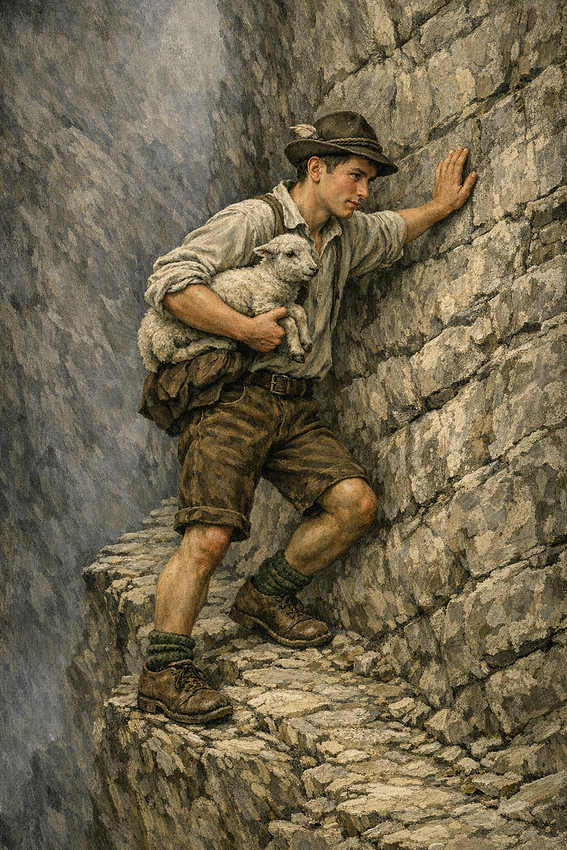
Approach
Story
“Havasu 402, contact Departure, 119.2.” “Phoenix Departure, Havasu 402, one thousand four hundred for three thousand.” “Havasu 402, turn left direct Buckeye, on course, climb and maintain eight thousand.” “Departure, Havasu 402, direct Buckeye, climb and maintain eight thousand.”
As I turned toward Buckeye VOR, the last rays of sun splintered above the mountains. I was the captain of a Navajo Chieftain, flying from Phoenix to Lake Havasu City, Arizona.
During the climb, Phoenix Departure handed me off.
“Havasu 402, Los Angeles Center, maintain eight thousand feet. Be advised, winds of forty knots have been reported at eight thousand feet over Needles VOR.” “Havasu 402, maintain eight thousand. Thank you for the wind report.”
I had checked the forecast earlier at Sky Harbor: two miles visibility, winds up to thirty‑five knots. The report confirmed it.
I glanced back at my eight passengers. Some were asleep; others watched the last light fade. Because of the weather at Lake Havasu, an instrument approach was required for arrival.
I anticipated the VOR approach to runway 14, followed by a circling maneuver to land. The final approach course was not aligned with the runway; a turn would be required to align with the runway. The approach included a holding pattern over the VOR, with a descent once established inbound.
The automated report included winds aloft: at eight thousand feet, wind 190 degrees at forty‑five knots, gusting to fifty‑five. The outbound leg of the published hold called for one minute. I extended it to one minute and thirty seconds. Mountains lay west of the VOR, and the additional distance provided the airspace needed to intercept the final approach course.
If alignment on the inbound course could not be established, I had a plan.
Approaching Needles VOR, I called Center.
“Los Angeles Center, Havasu 402, level at eight thousand, request VOR approach runway 14, circle to land.” “Havasu 402, cleared VOR 14 approach to Havasu, circle to land. How’s the ride?” “Havasu 402, cleared for the approach. Moderate.” “Havasu 402, thank you. Report final approach course inbound.”
One minute from the VOR, I selected fifteen degrees of flaps and slowed to 130 knots. I set the outbound course. The Chieftain had no autopilot. My hands maintained a light grip on the yoke.
Over the VOR, I initiated a right turn. I was above the clouds, black sky overhead. As the needle moved, I rolled wings level and intercepted the outbound course. Established, I began a descent to 6,200 feet and started the timer.
Clouds engulfed the airplane. Visibility dropped to zero. I relied on the instruments for navigation and orientation.
At one minute and thirty seconds, I began the turn inbound and dialed the final approach course into the HSI.
I rolled wings level on an intercept heading and slowed to 120 knots. After a few seconds, the course needle began to move rapidly. From the rate of movement, I knew an immediate correction was required.
I banked left to thirty degrees. The needle slowed, then stopped left of center. The wind had pushed me through the final approach course.
West of me were mountains.
I increased the angle of bank and increased pressure on the left rudder pedal. The needle began moving back toward the selected course. I initiated the rollout to capture the inbound. The needle centered during the rollout.
I continued the turn into the wind to maintain alignment. With the needle centered in the HSI, I rolled wings level.
The Horizontal Situation Indicator showed wings level.
My body told me something else. I felt as if I were rolling over.
The rapid sequence of turns had induced vertigo. Every physical sensation told me I was in a left turn. Every instinct demanded correction. Every sense except one: my vision.
I locked my vision on the artificial horizon and scanned the altimeter and VSI. The horizon showed wings level. The HSI confirmed we were established on course.
“Los Angeles Center, Havasu 402, final approach course inbound on the VOR 14.” “Havasu 402, report runway or missed approach.”
The controller’s calm voice contrasted sharply with the chaos inside me. The instruments showed on course, on altitude, on speed. My body told me a different story.
“Havasu 402, will report runway in sight or missed.”
The rolling sensation continued. Sweat gathered on my face. My body was convinced I was banking left and drifting.
Trust the instruments.
The instruments were the source of truth. My inner ear demanded I believe the lie it fostered.
Crossing the VOR, I extended the landing gear and began the descent to decision height. With no reference to the horizon, I depended on the instruments for guidance. The airplane remained wings level, on course, on speed, in a descent.
At decision height, we broke out of the clouds.
In an instant, my body aligned with reality. I took a breath, extended flaps to twenty‑five degrees, turned the airplane to align with the runway, and made a normal landing.
“Los Angeles Center, Havasu 402, runway in sight.”
No one else knew the effort it took to keep my attention fixed on the source of truth and refuse the lie. I was exhausted.
Reflection
The Artificial Horizon showed me reality and kept the aircraft safe.
With the Lord as my Shepherd, I am safe.
Prayer
Read
Psalm 23:1–3
]]>
Story
I decided to spend a few minutes before breakfast reading the Word. Just a few minutes. One minute to ponder what I read, followed by a brief prayer. I placed my Bible on the table. John seemed like a good place to begin.
“In the beginning…”
The first three words from John 1:1 were still forming on my lips when I felt something on my mouth. A fly. Another landed on my ear. Another struck my eye. I despise flies.
I closed my eyes and covered my face with my hands. The sound of their movement pushed aside the Scripture I had intended to read. They persisted.
I opened my eyes and saw one resting on the table. I slammed my hand down, hoping to end the distraction. It escaped. Another landed on my head. One returned to my ear.
“I give up. This is hopeless,” I said. “I can’t win this battle.”
The flies had taken over my attention. Whatever this moment was meant to be, it could not continue like this. Something had to change.
I wondered how a fly could move so quickly. It occurred to me that it was simply good at being a fly. And if that were true, then perhaps the solution was not to react faster, but to stop reacting at all.
To free myself, I told myself, I needed to be good at being in the presence of God.
My attention—my thoughts, my focus, my reactions—had been consumed by the flies. A verse from the Psalms came to mind about the Lord inhabiting the praise of His people.
If the Lord inhabits praise, then praise must be the means of entry. I set my aim on praise. For praise to take hold, peace had to prevail.
The flies were the opposite of peace. They had to be removed.
I retrieved a roll of flypaper and pulled out several inches, hanging it near the edge of the table. This would take time, so I left the room and went for a walk.
Twenty minutes later, I returned. I expected the flies that had caused the disruption to be caught and still.
Five flies clung to the flypaper. The room that had been restless was quiet. Order replaced agitation. Peace prevailed.
I sat again at the table. The Bible lay open where I had left it. Nothing moved. Nothing buzzed.
Now, the only distraction left was my own mind.
“Where are You? I did everything right. I removed the distractions. I realigned my thoughts to focus on Your glory. I read Scripture. I praised. And I am alone.”
Reflect
Prayer
Read
Luke 10:38–42
]]>
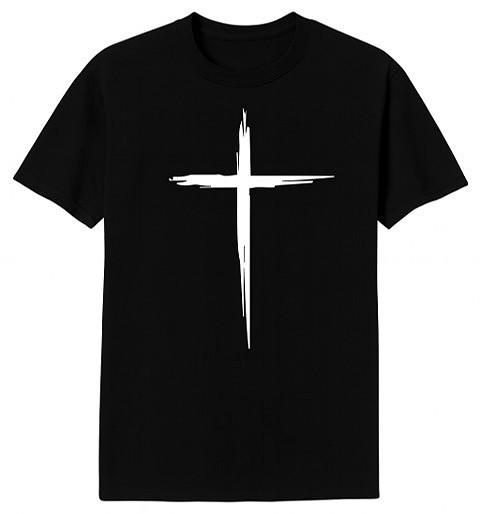
Silver Cross
A black shirt with a silver cross blazoned on the front. A young man with a story to tell.
Silver has been valued for centuries. Making pure silver is a refining process. Silver is often found in lead ores. The ore is extracted and crushed, then heated to a high temperature in a furnace. Quartz is added to form a mobile slag, separating impurities from the molten metal. This process produces an alloy of lead and silver, still containing significant amounts of lead.
To separate the lead from the silver, ancient metallurgists employed cupellation. Lead readily oxidizes when exposed to oxygen at high temperatures. Silver is a noble metal because it resists oxidation, remaining unchanged where more reactive metals are destroyed.
In cupellation, the lead–silver alloy is placed on an ash hearth or into a porous container called a cupel, often made from clay and bone ash.
The alloy is heated to temperatures above 890–960 °C in a well‑oxygenated atmosphere. Bellows were used in ancient times—and are often still used today—to increase ventilation and intensify the heat of the flame.
Under these conditions, lead oxidizes to form litharge (PbO). The molten lead oxide is absorbed by the ash or drained from the furnace, leaving behind pure metallic silver.
This process demands constant vigilance. The alloy must remain in the hottest part of the fire so all of the lead can be drawn away. If it is removed too early, lead remains. If it is extracted too late, the silver is lost.
The metallurgist maintains constant focus on the metal and at the precise moment he sees his reflection on the surface he knows the silver is pure. At that moment he extracts the pure silver.
In your youth, you were permeated by forces beyond your control. You suffered at the hands of those who were meant to protect you.
Like the lead that binds with silver, your suffering became wounds that obscured the man God created you to be.
The infinite, incomprehensible Creator God of the universe saw you suffer. He felt your anguish. He sat with you as you endured the heat.
The One who created you became your Savior.
He watched as your pain and wounds ebbed away. When His work was complete, He withdrew you from the furnace, led you to a place of safety and rest, and surrounded you with four friends who love you.
God created you to be silver—pure and noble. The fire of adversity could not destroy what He created.
A black shirt with a silver cross blazoned on the front. A young man with a story to tell. A young man of silver. A young man who reflects the glory of God.
Malachi 3:2–3
]]>


A cowboy friend invited me up into the mountains to help him spread salt and cut trail for his cows. He wanted to move them soon, but the brush and fallen logs made the route too tight for cattle to pass through. He sent me the coordinates to a campsite near a stream, and when I arrived the whole place was covered in wildflowers — purple, yellow, pink, white — like someone had spilled paint across the meadow.
The first day we hauled in a bag of salt and another of minerals, dumping them into rubber tubs for the cows. The next morning he brought the horses. The terrain consisted of open meadows, patches of loose rock, fallen branches, underbrush, and stretches of marsh. Our job was simple: clear the trail. He rode a colt. I rode Tigger and led a pack horse loaded with a chainsaw, oil, and fuel.
“Take Tigger down that road and I’ll catch up,” he said, pointing to a wide, flat stretch of dirt bordered by thick forest on the left and a sloped meadow on the right.
I put Tigger into a trot and tapped him up to a fast trot. My friend’s whistle cut through the quiet air.
“Come back! You went too far.”
I turned the horses around. I dallied the lead rope to the saddle horn and put Tigger into a lope. Then I remembered the chainsaw and fuel in the pack horse’s saddle bags and reconsidered that choice. I checked Tigger back to a trot and rode up to meet my friend.
We worked our way along the trail, clearing brush and moving branches. After a few hours, he gave me a break and took the pack horse— a decision that would prove beneficial later in the day.
We were working through thick trees and brush when we came to a sharp drop‑off.
“Which way?” I asked.
“Forward,” he said. “Don’t you remember? We crossed the stream here on the way in.”
He led the pack horse over the edge and down a steep slope of loose rock. I guided Tigger along a parallel line. I gave him his head. He was a brave horse, and he picked his way down until we reached the shallow stream at the bottom — fast water sliding over rocks.
When Tigger approached the water, he stopped. Horses are afraid of two things: things that move and things that don’t. I felt the tension gather through his body. The sight and sound of the moving water triggered his fear, and he reacted. He pivoted to the left, his nose pointed up the steep slope. It was an impossible position for a horse to hold.
He stepped backward with his right hind foot, and his front end lifted off the ground. My mind went straight to the physics of it: His center of gravity is too low — he’s going to flip over.
I jammed my boots into the stirrups and leaned forward as far as I could, my head nearly over his. His front feet came back down onto the gravel, but we weren’t safe yet. With all four feet on the ground again, I used direct rein and eased him around. I settled myself back into the saddle. We paused. I exhaled and let my body soften. Tigger felt it and softened too.
My friend’s voice carried a sense of release. “Good cowboy work.”
I put the reins forward and gave Tigger a moment to look at the water. Then I touched him with my heels. He stepped forward and crossed the stream.
A few days later I told this story to an eleven‑year‑old cowboy. He grinned and said, “Yeah, ya’ gotta’ keep pedalin’ all the way.”
Two years before that, I’d been on a flat trail ride when the white horse I was on reared up. His front feet were only a few feet off the ground, and I had no idea what to do. The ranch owner behind me said, “Lean forward and put him down.” I did, and his feet came back to the ground.
Three strides later he came up again. His neck slammed into my chin. I jammed my boots into the stirrups and leaned forward. His feet came back down.
That big white horse taught me a skill I needed — a skill that saved my life.
Sometimes life hands you a challenge that turns out to be a lesson. And sometimes that lesson ends up saving your life.
]]>