Horse Maneuvers
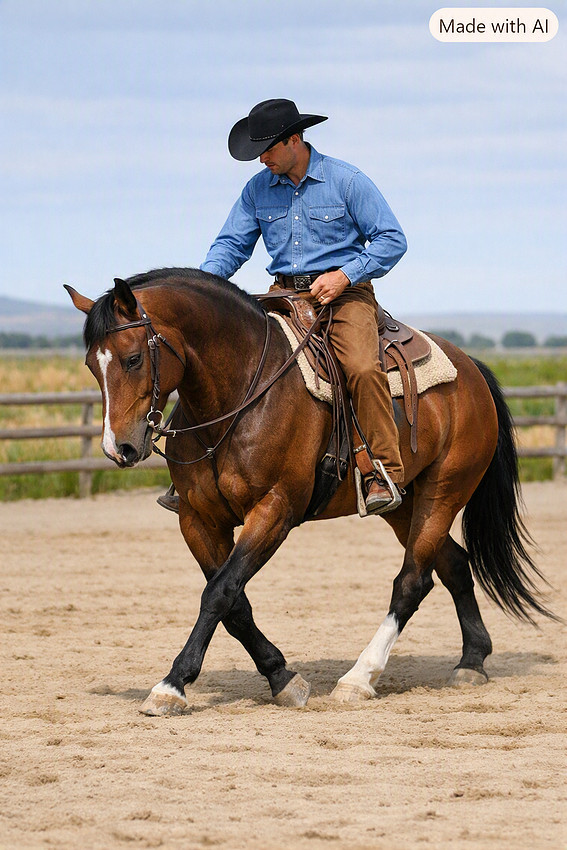

Horse Maneuver Guide
Body Shaping with Cues
Maneuver 1: Tight Circle — Body Shaping With Cues
Goal: Shape the horse so the shoulders stay free, the hip stays out, and the circle stays tight.
How to Shape the Horse:
- Shape the nose slightly inward Use the inside rein softly to tip the nose without pulling.
- Shape the shoulders to stay loose and free Lay the outside rein snug against the neck to guide the shoulders around the circle.
- Shape the hip outward Press with your inside leg to push the hindquarters out and prevent the horse from falling inward.
- Shape your own body to match the circle Turn your eyes, torso, and seat in the direction of travel so the horse follows your alignment.
Result: The horse flows around the circle with balance, free shoulders, and correct alignment.
Maneuver 2: Two‑Track — Body Shaping With Cues
Goal: Shape the horse so the nose looks one way while the body travels another, creating two distinct tracks.
How to Shape the Horse:
- Shape the nose to the right Use the right rein softly to ease the nose to the right without bending the whole body.
- Shape the shoulders to stay straight Use the left rein to guide the shoulders and prevent them from drifting or over‑bending.
- Shape the hindquarters to stay under the horse Keep your left leg on to block the hips from swinging left.
- Shape your line of travel to the left Aim your seat and torso left so the horse follows the only open path.
Result: The horse moves left in a straight, controlled line while the nose stays tipped right, producing a clean two‑track.
Maneuver 3: Point‑and‑Shoot — Body Shaping With Cues
Goal: Shape the horse to commit instantly and confidently to a clear line of travel.
How to Shape the Horse:
- Shape your focus toward the target line Lock your eyes on the exact point you want to travel toward.
- Shape your torso and seat to align with the line of travel Turn your body so your hips and shoulders match the direction you intend to go.
- Shape the forward energy of the horse Press with your inside leg to create the power for the gait you want.
- Shape the straightness of the movement Point both hands forward together, keeping the reins even to guide the horse straight without pulling.
Result: The horse commits to the line, moves straight and without wobble, and responds to your intention rather than mechanical cues.
Maneuver 4: Spin — Body Shaping With Cues
Goal: Shape the horse so the shoulders turn crisply around a planted inside hind leg while the body stays straight and elevated.
How to Shape the Horse: • Shape the nose slightly to the inside Use the inside rein softly to tip the nose just an inch inward without bending the whole neck.
• Shape the shoulders to lift and move around Use the outside rein to guide and support the shoulders, keeping them elevated and preventing forward drift.
• Shape the hindquarters to stay anchored Keep your inside leg at the cinch to hold the pivot leg in place and stop the hips from stepping out.
• Shape your line of motion around the pivot Aim your seat and torso straight and centered so the horse follows the only open path: around, not forward.
Result: The horse stays straight through the body, plants the inside hind, and turns the shoulders around in a clean, cadenced spin.
Maneuver 5: Standstill‑to‑Lope — Body Shaping With Cues
Goal: Shape the horse so he lifts, steps cleanly into the correct lead, and moves forward in one smooth stride from a standstill.
How to Shape the Horse (Right Lead):
• Shape the nose slightly right Use the right rein softly to tip the nose just enough to indicate the lead without bending the whole neck.
• Shape the shoulders to stay elevated and free Use the left rein to support the shoulders so they don’t fall inward or drift before the lope step.
• Shape the hindquarters to step under on the outside leg Keep your right leg at the cinch to stabilize the ribcage and prevent the hips from swinging out. Move your left leg slightly behind the cinch to ask the outside hind to step under and initiate the right lead.
• Shape your line of motion forward and up Aim your seat forward, not upward or backward. Open your hips so the horse sees the only available path: forward into the lope.
Result: The horse lifts, steps under with the left hind, and rolls cleanly into a right‑lead lope in one stride.
Maneuver 6: Rollback — Body Shaping With Cues
Goal: Shape the horse so he stops, pivots over the hocks, and leaves in the opposite direction in one fluid motion.
How to Shape the Horse:
• Shape the nose slightly into the stop Use both reins evenly to bring the nose straight and prepare the shoulders for the rollback.
• Shape the shoulders to lift and pivot Use the outside rein to support the shoulders so they stay elevated and ready to roll over the hocks.
• Shape the hindquarters to sit and coil Keep both legs close to hold the ribcage centered, allowing the hindquarters to drop and load for the pivot.
• Shape your line of motion backward then out Aim your seat deep for the stop, then shift your torso toward the new direction to open the path for the departure.
Result: The horse stops, pivots over the hocks, and leaves in the opposite direction with a clean, powerful rollback.
Maneuver 7: Lead Change — Body Shaping With Cues
Goal: Shape the horse so he switches leads in one stride while staying straight, balanced, and elevated.
How to Shape the Horse:
• Shape the nose slightly toward the new lead Use the new inside rein softly to tip the nose without bending the whole neck.
• Shape the shoulders to stay straight and lifted Use the new outside rein to support the shoulders and prevent diving or drifting during the change.
• Shape the hindquarters to step under on the new outside leg Move your new outside leg slightly behind the cinch to ask the outside hind to step under and initiate the new lead.
• Shape your line of motion forward and level Keep your seat centered and forward so the horse sees the only open path: a smooth, forward lead change.
Result: The horse switches leads in one stride, staying straight, balanced, and ready for the next maneuver.
Maneuver 8: Stop and Back — Body Shaping With Cues
Goal: Shape the horse so he stops square, softens, and backs straight with light, rhythmic steps.
How to Shape the Horse:
• Shape the nose straight and soft Use both reins evenly to keep the nose centered and relaxed for the stop and back.
• Shape the shoulders to stay lifted and straight Use light rein support to prevent the shoulders from drifting or dropping during the back‑up.
• Shape the hindquarters to step evenly backward Keep both legs close to maintain straightness and encourage the hind legs to step back in rhythm.
• Shape your line of motion backward with your seat Shift your seat slightly back and breathe out to open the backward path and invite the horse to follow.
Result: The horse stops square, softens, and backs straight with light, even steps.
Maneuver 9: Cow‑Tracking Position — Body Shaping With Cues
Goal: Shape the horse so he stays in the correct position on a cow: balanced, responsive, and ready to mirror the cow’s movement.
How to Shape the Horse:
• Shape the nose toward the cow Use the inside rein softly to keep the nose pointed at the cow without over‑bending.
• Shape the shoulders to stay elevated and ready Use the outside rein to support the shoulders so they can lift, turn, or stop instantly.
• Shape the hindquarters to stay under and coiled Keep both legs close to maintain readiness for quick stops, turns, or rollbacks.
• Shape your line of motion to match the cow Aim your seat and torso directly at the cow so the horse follows the only open path: the cow’s movement.
Result: The horse stays balanced, elevated, and ready to track, stop, turn, or roll back in perfect cow‑working position.
Maneuver 10: Cow‑Chase Position — Body Shaping With Cues
Goal: Shape the horse so he locks onto the cow, stays balanced and elevated, and moves with the cow’s line of travel at speed.
How to Shape the Horse:
• Shape the nose toward the cow Use the inside rein softly to keep the nose pointed at the cow without bending the whole neck. This keeps the horse’s attention fixed on the cow’s shoulder.
• Shape the shoulders to stay lifted and ready to turn Use the outside rein to support the shoulders so they stay elevated and prepared for instant direction changes. This prevents diving or dropping when the cow moves.
• Shape the hindquarters to stay under and coiled Keep both legs close to maintain readiness for quick stops, rollbacks, or bursts of speed. This keeps the hind end loaded and ready to push.
• Shape your line of motion to match the cow Aim your seat and torso directly at the cow’s shoulder. The horse will follow the only open path: the cow’s movement, whether forward, sideways, or stopping.
Result: The horse locks onto the cow, stays balanced and elevated, and mirrors the cow’s movement with clean, responsive tracking.
The Emergency Stop
Maneuver 11: Tight Circle — Emergency Stop Goal: Shape the horse so he cannot run forward, causing him to slow, rebalance, and stop safely.
How to Shape the Horse:
• Shape the nose sharply inward Use the inside rein to bring the nose into the circle, removing the horse’s ability to travel straight.
• Shape the shoulders to fall into the circle Use the outside rein to prevent the shoulders from escaping outward, forcing the horse to follow the arc.
• Shape the hindquarters to disengage Use your inside leg to block the ribcage and your outside leg to push the hips slightly out, removing forward drive.
• Shape your line of motion into the circle Aim your seat and torso into the circle so the horse sees the only open path: a tight, slowing turn.
Result: The horse loses forward momentum, disengages the hindquarters, and stops safely without force or panic.
Maneuver 12: Cutting Horse Safety — Body Shaping With Cues
Goal: Shape yourself and the horse so he tracks the cow safely without dropping, diving, or exploding out from under you.
How to Shape the Horse:
• Shape the nose toward the cow without over‑bending Use the inside rein softly to keep the nose pointed at the cow’s shoulder. This keeps attention forward without triggering a full cutting drop.
• Shape the shoulders to stay elevated and controlled Use the outside rein to support the shoulders so they stay lifted and ready, but not released enough to initiate a cutting maneuver.
• Shape the hindquarters to stay under and balanced Keep both legs close to maintain readiness, but do not drive the hindquarters aggressively. This prevents the horse from coiling for a full cutting burst.
• Shape your line of motion forward and centered Aim your seat straight and neutral. Do not lean forward (which cues a drop) and do not lean back (which destabilizes you). Neutral seat = safe tracking.
Result: The horse tracks the cow smoothly and safely, staying balanced and responsive without performing a full cutting maneuver.
